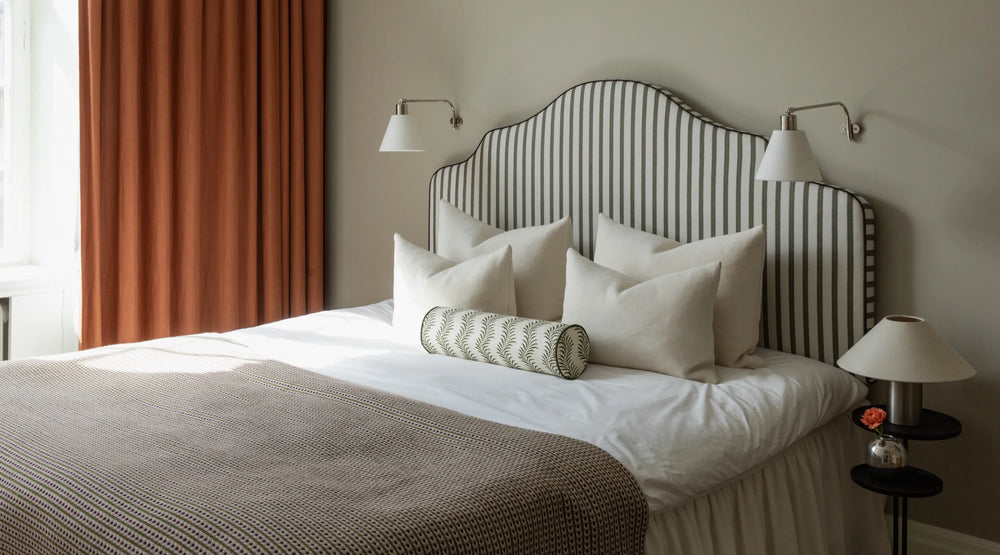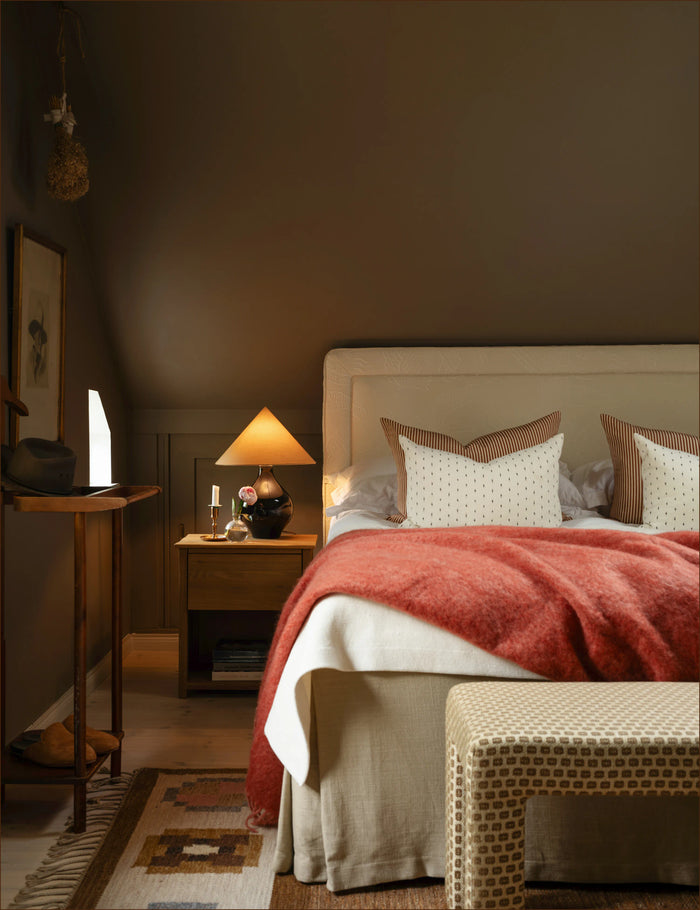
Wall-mounted headboard, headboard on legs, or all the way down to the floor – which one should you choose?
Text mikaela Rosen · 8 April 2026
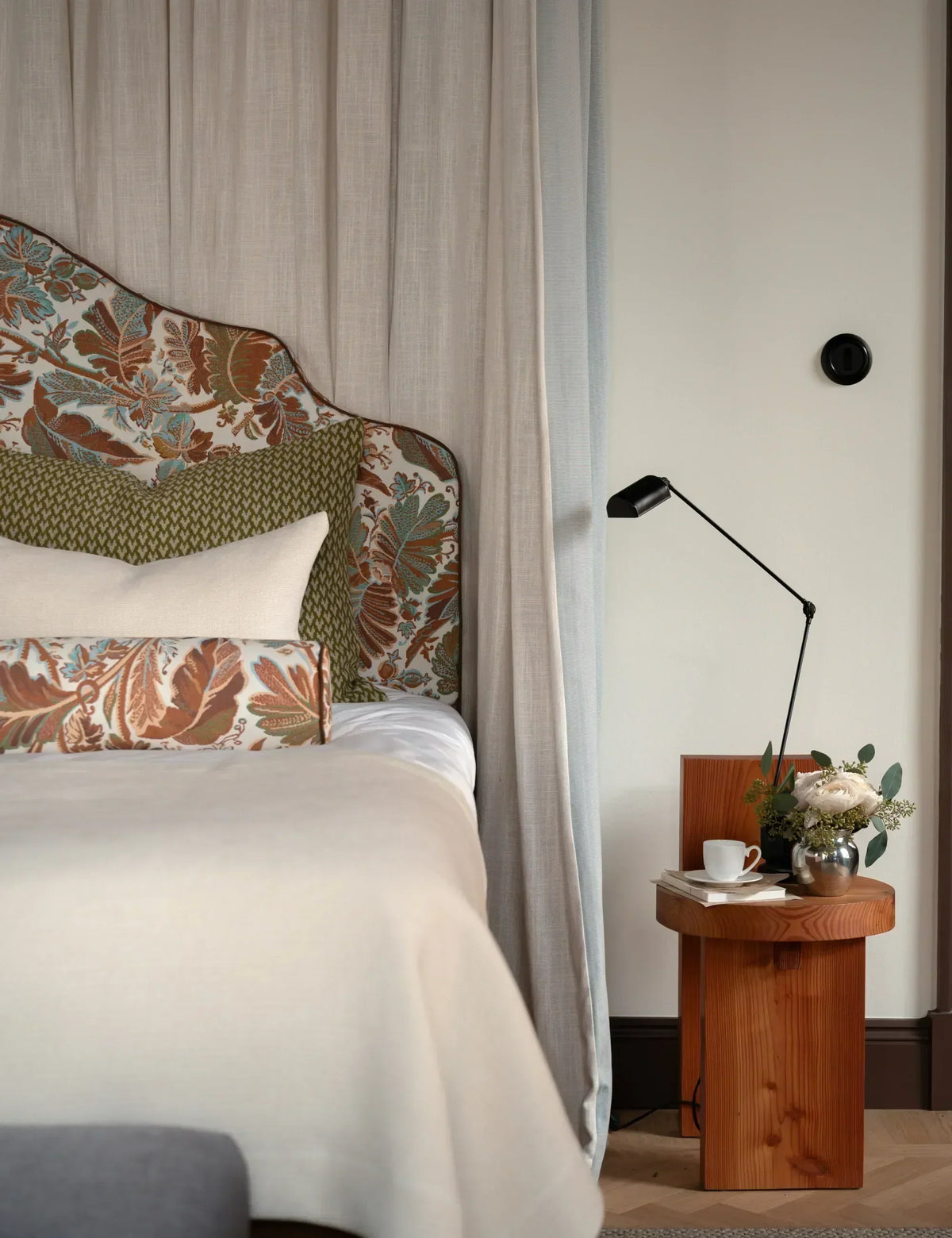

When designing a bedroom, the headboard plays an important role in both comfort and aesthetics. It not only provides support when sitting up in bed, but also acts as a key visual focal point in the room.
There are four common ways to design and install a headboard:
- Wall-mounted headboard
- Headboard with upholstered legs
- Headboard with concealed legs
- Floor-standing headboard (extending all the way to the floor)
Each of these options has its own advantages depending on the layout of the room, your style, and how flexible you want your furniture arrangement to be.
In this guide, we go through the differences between these four solutions and help you choose the right headboard for your bedroom.
What is a wall-mounted headboard?
A wall-mounted headboard is installed directly onto the wall behind the bed, rather than being attached to the bed frame or standing on the floor.
This type of headboard has become increasingly popular in modern and high-end bedrooms, as it creates a more architectural and integrated look.
The bed is simply placed in front of the headboard, allowing for greater freedom in its design — both in terms of width and height.

Advantages of a wall-mounted headboard
Greater design flexibility
Because the headboard is not attached to the bed frame, it can be designed in almost any size or shape. This makes it ideal for a bespoke headboard tailored to the room.
For example, many interior designers choose to make the headboard wider than the bed to create a more luxurious and balanced look.

Flexible height
A wall-mounted headboard makes it easier to determine the exact height.
This means you can position the headboard where it works best visually in the room — especially in bedrooms with high ceilings, where a taller headboard can create a more elegant feel.


Stable construction
Since the headboard is directly attached to the wall, it is often more stable than one attached to the bed.
It is not affected when the bed is moved or adjusted, thus giving a more permanent and solid impression.
What is a headboard with legs?

Advantages of a headboard with legs
Easy installation
A headboard with legs is usually easy to install.
This makes it a practical option if you want to be able to move or rearrange the furniture in the bedroom.

Easy to move
Since the headboard is attached to the bed, the entire piece of furniture can be moved together.
This makes it a good option for smaller homes or rental properties where you don't want to drill holes in the wall.
Classic appearance
Headboards with legs are often found in more traditional bedrooms and can be a good choice in simpler or more functional environments.

Wall-mounted headboard vs. headboard with legs
|
Feature |
Wall-mounted headboard |
Headboard with legs / Floor-standing |
|
Installation |
Mounted on the wall |
Stands on the floor |
|
Stability |
Very stable |
Stable but freestanding |
|
Design possibilities |
Very extensive |
Varies depending on the model |
|
Size |
Can be fully custom-made |
Mostly standard size |
|
Style |
Modern and exclusive |
Traditional |
For those looking to create a bespoke headboard with perfectly balanced proportions, there are several options. Wall-mounted headboards offer maximum design freedom, while headboards with legs and floor-standing models provide flexibility and a range of different expressions.
Why interior designers often choose wall-mounted headboards

In many modern interiors, designers prefer wall-mounted headboards because they offer greater opportunities to create a cohesive design.
A wall-mounted headboard can, for example:
- Be wider than the bed
- Align with bedside tables
- Be combined with wall panels
This is why this type of headboard is often used in boutique hotels and exclusive residences.
When a headboard with legs or a floor-standing headboard may be a better choice

For example:
- In rental apartments where you are not allowed or prefer not to drill into the walls
- In bedrooms where the layout is frequently changed
- In temporary living situations
- When you want a simpler placement without wall mounting
- When you want to create a more built-in look without fixing anything to the wall
- When the headboard is designed to be wider than the bed and clearly visible on the sides
In these cases, a headboard with legs can be a flexible solution, while a floor-standing headboard is well suited for those looking to create a more architectural and visually impactful expression.
How a custom-designed headboard elevates the bedroom
Regardless of whether it is wall-mounted, stands on legs, or is floor-standing, a thoughtfully designed headboard can transform the entire feel of the bedroom.
A bespoke headboard allows you to choose:
- Exact size
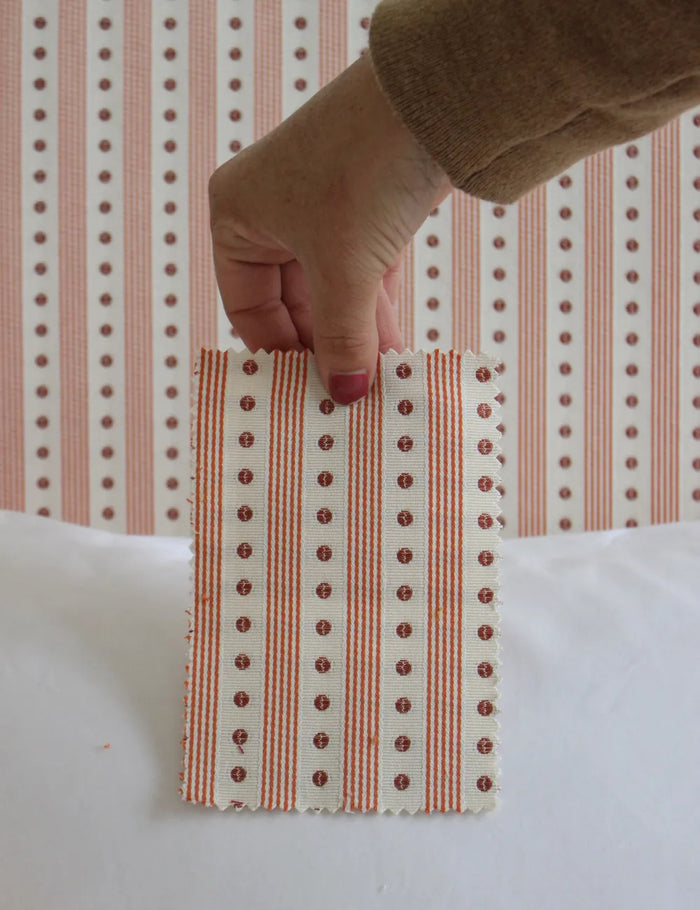
- Fabric and color
- Design and shape
- The right proportions for the room
This makes the headboard a central part of the bedroom's design.

Asked questions
Summary
The choice between a wall-mounted headboard, a headboard with legs, and a floor-standing headboard comes down to both style and function.
For a more architectural and refined look, a wall-mounted headboard is often the best option. For flexibility and ease of installation, a headboard with legs can be more practical, while a floor-standing headboard creates a more built-in and visually defined presence in the room.
Whichever option you choose, a well-designed headboard can elevate the entire bedroom and create a more harmonious and considered interior.
Recommended internal links